Algorithm of the Night
(A review of Algorithm of the Night: Film Writing 2019-2025 by A. S. Hamrah, first published by Headstuff.org)
A.S. Hamrah is the film critic we never knew we needed. Against the unending spiral of authoritarian hubris and livestreamed brutality that is contemporary history, mediated by devices that are data-hungry and surveillance-prone, he pursues a course of belligerent non-compromise, wielding cultural critique the way a guerrilla leader wields his weapon: as an instrument that might serve humanity and make tyrants tremble. His new collection of film writings, Algorithm of the Night, is a distillation of his singular style.
Hamrah writes with an accuracy so laconic it must be true; the sting of the real accompanies his every judgement. So Yorgos Lanthimos's The Favourite “is perverse and sadomasochistic, a gratifying evocation of doddering power and the jockeying that swims in its decline.” By contrast, Joachim Trier, the new-age Scandinavian auteur, “doesn't aim high enough, and he still never hits his target.” Paul Thomas Anderson, meanwhile, is ambivalently acknowledged as an oddity to be reckoned with: a fully funded eccentric who seems to live both comfortably within and edgily adjacent to the Hollywood system. “Whether you view him as privileged and spoiled or talented and committed”, Hamrah reflects, Anderson is unusual among contemporary American film-makers, in that the “poison that is Hollywood nurtures more than sickens him.”
Working very much post-pandemic, and mid-way through another Trumped-out, “low, dishonest decade”, Hamrah himself seems sickened by the prospect of cinema becoming – or having already become – no more than an outcrop of empire and capital, an assemblage of toxic, re-packaged machine-parts, projecting warped hallucinations that both feed and reflect the violence of US culture. “The American industry rules cinema the world over”, he perceives, quoting Jean-Luc Godard, “There is nothing much to add to this statement of fact.”
Hamrah's diagnosis is brave, and grim. The “confluence of digital projection, streaming channels, AI, and the alleged death of criticism often makes it seem like we are dealing with the destruction of a worldview”, he notes: “I believe that this is indeed the goal of the corporations that control the studios and publishers”, organizations addicted to profit and averse to creativity. Money rules, and – as advertising executives and fascist propaganda ministers have long understood – the cinema can be a uniquely effective means of numbing or pacifying us expectant masses, waiting to feel something (anything!) as the green screens shimmer and the drones take flight. We can't talk about movies, Hamrah insists, without talking about power.
Anyone who's ever heard recordings of Hamrah interviewed will be aware of his talent for sounding like a barking grizzly bear or a pre-laryngitis Paul Schrader when his buttons are pushed. Tentative suggestions that some TV shows are in fact smart, enjoyable and well made, or that Megalopolis (2024) was none of these, will be met with rampaging torrents of interjectional scorn, interruptions such as: Who the hell cares! A television screen is not a movie-theatre! You are incorrect in every detail! You don't know what you're talking about! Hamrah's gift for odd fixation and cantankerous folly is part of his charm: the flip-side of his unflagging belief in movie-going as one of life's most necessary compulsions, a means of repudiating power and studying its ways, of gaining a sharper understanding of our harsh and tender implication in the world – by vanishing for a few hours inside a darkened box.
There are some surprises along the way. It turns out, for instance, that Hamrah, a fearsome anti-capitalist, has little feel for Ken Loach's work – as though the effort of restraining his sardonic impulses, in deference to the veteran Leftist director, had sapped his energy and interest. His passing reference to the “mind-blowing” I Am Cuba (1964) begs the question as to why he hasn't reviewed it in his book. For all his snarky brilliance in exposing the calculated vapidity of “Netflix movies” or Fast and Furious 9, there are times when we wonder whether his critical force might be better dedicated to pondering The Red and the White (1967), or any film by Andrea Arnold, or Michael Mann's The Jericho Mile (1979), that director's most consistently and persuasively radical feature (with the possible exception of his Muhammad Ali biopic).
Those are more or less random examples of movies that I wish he'd written about. Like Pauline Kael before him – with whom he has his differences – Hamrah is so fierce and brightly perceptive a critic that we always want more, and feel a tad wounded, of course, when the “hard-boiled and subtly melodramatic” verdicts he flings onto the table don't quite match with our hopes (his foregoing description of the Chinese actress Zhao Tao neatly characterises his own prose).
In general, however, Hamrah's tone of hard-nosed impatience with the great and mighty is a caustic delight. Aaron Sorkin, he contends, exemplifies the “phenomenon in American culture” whereby “someone not very good at their job becomes known to everyone as its best practitioner.” Calling “a movie 1917 tends to obscure other things that happened that year”, Hamrah goes on to suggest, while berating “Sir Sam Mendes” for making a deliberately unthinking film, whose “pointlessness... exactly mirrors the pointlessness of World War I.” The “self-conscious boredom and fascism of Denis Villeneuve's films” he also names and accuses – charged with being “dull and literal”, as well as politically suspect.
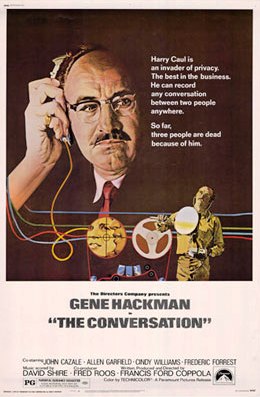
Hamrah's pugnacity towards the doyens and big-wigs of the awards-circuit cinema system is so abrasive, and deftly discerning, that when he expresses unalloyed affection for an artist or their work, we nearly weep – finally affirmed in the knowledge that an unembittered love is still possible. Gene Hackman's “self-effacing performance” in The Conversation he praises as a stark wonder, a portrayal of a “soul-sick, uneasy man that burrows into crevices and bores through brutalist architecture.” With its “conflicted humanism and acceptance of change”, Ryusuke Hamaguchi's work is granted its place “in the forefront of contemporary cinema.” Remembering Anna Karina (1940-2019), Hamrah argues, lovingly, that she
will forever be known as the woman who made the early films of Jean-Luc Godard what they are: pinnacles of cinema. As long as people watch movies, the collaboration of Anna Karina and Godard will stand as an example of everything the cinema can be, of all its possibilities.
There's often a Francophile tinge to Hamrah's observations. Godard, Agnès Varda, and Robert Bresson are touchstones throughout the book, and his tribute to Serge Daney (1944-1992) is one of the best things in it – combining tender lament and level-eyed regard, as though the maverick French film critic (and “last great editor” of Cahiers du Cinéma) had set the standard which Hamrah continues to aim for. “Daney loved the American cinema”, Hamrah says, “but he resisted where it comes from. He inscribed that resistance into everything he wrote.”
Hamrah's reviews, too, are a form of resistance writing. With fearless vim and unflinching moral intensity, he holds the world – and the world of movies – to account, reminding us of the art, the passion, the human connection and understanding, which the colonizing leviathans of big money and big data would reduce to mere content if they could. Hamrah's words make that totalitarian quest more difficult.